Wednesday, March 20, 2013

Williams Woods

Williams Woods

Our trip to Williams Woods, located in Charlotte, Vermont,  took place on a overcast day in mid-February with a temperature in the 30s. Upon entering the woods we came across a large swath of of forest that had been disturbed. For over three hundred feet there were trees down in various directions and of various ages. We determined the disturbance had been a microburst of wind which violently struck the trees and caused them to fall in such a disarrayed fashion. 
Area affected by microburst
Beyond the disturbance we came upon the edge of the woods which bordered a field. Judging by the placement of the older trees along the edge of the field we found that the property lines had shifted slightly over the past one hundred years. Many of the trees in this area were between fifty and one hundred years old.
Deeper into the woods we came upon a turkey that had been killed recently. Beneath the turkey we found corn that someone had either baited or fed to the turkey but the person who fed the turkey was not the one who killed it. The animal responsible for killing the turkey was probably a fisher cat or possibly a bobcat. The creature perched above the corn, waiting for the turkey to amble over and begin eating, then the cat jumped down from the tree and killed the turkey.


Old Growth White Oak
As we moved deeper into the woods we came across some older trees that may be over one hundred years old. They stood much taller than the other trees which tended to be hemlocks. Beyond the older trees is a stand of young white pines which were between twenty and thirty years old. Some of these trees were found to have been used by woodpeckers. 
Young White Pine Stand

Shelburne Pond

Shelburne Pond


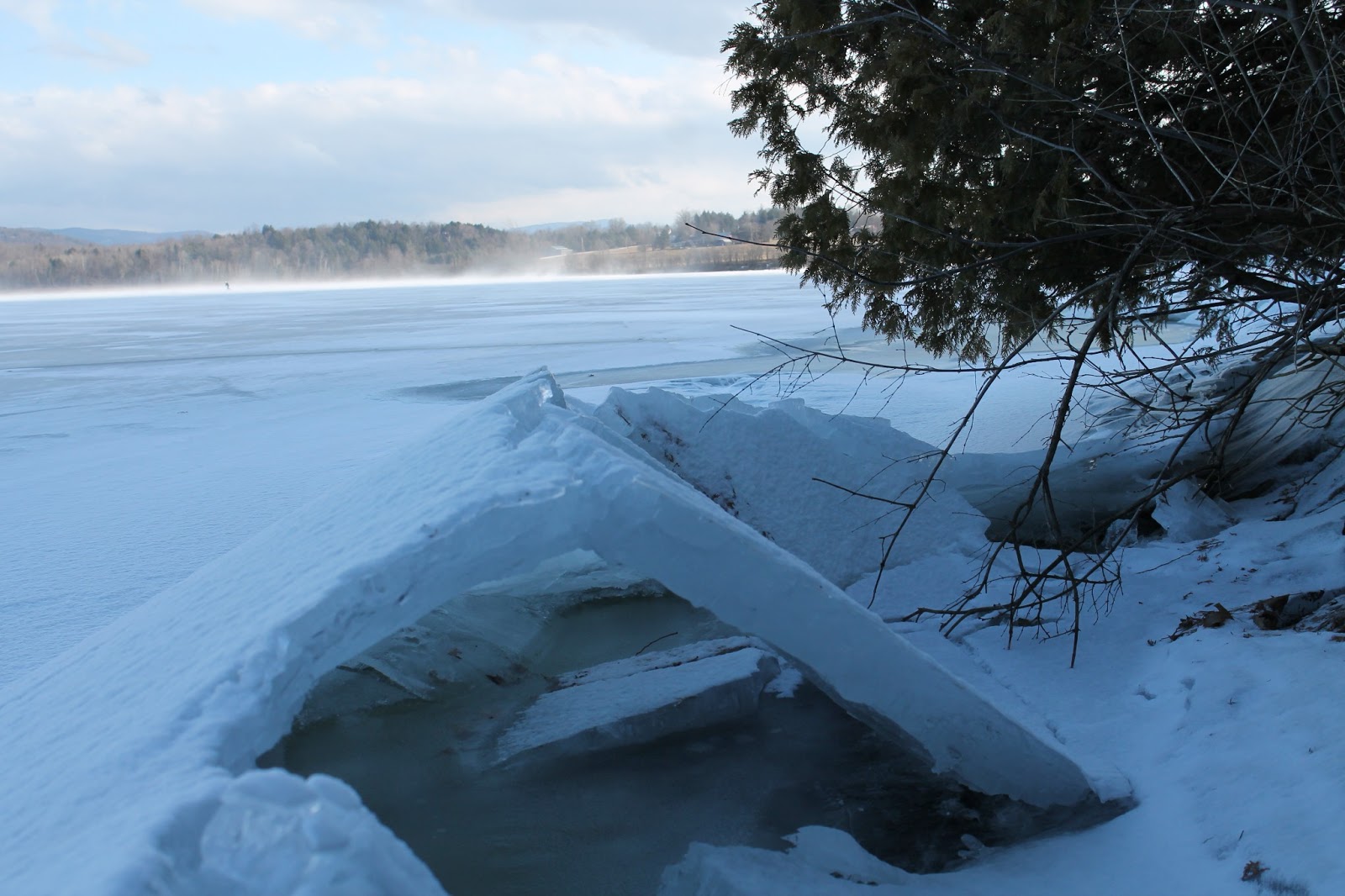
Our trip to Shelburne Pond took place in the first week of February on a sunny yet cold and windy day.  The large pond was frozen solid in most places although a recent bout of warm weather has left some ice thin. One of the first things encountered was a white pine that was ripped from its roots on the shore of the pond. It had taken another tree with it and had a few trees around it that had fallen in the same manner. The reasoning for the trees to have fallen like that was linked to super storm Sandy which brought high winds to the area in the fall of 2012. 
Following the discovery of the tree, we examined the ice which had shifted due to the winds and fluctuations in temperature. The ice had separated and come back together with such force that it replicated the formation of mountains due to tectonic plates. As we moved north along the western side of the lake we encountered a hemlock grove that dominated the area and was found to be a great habitat for porcupines.
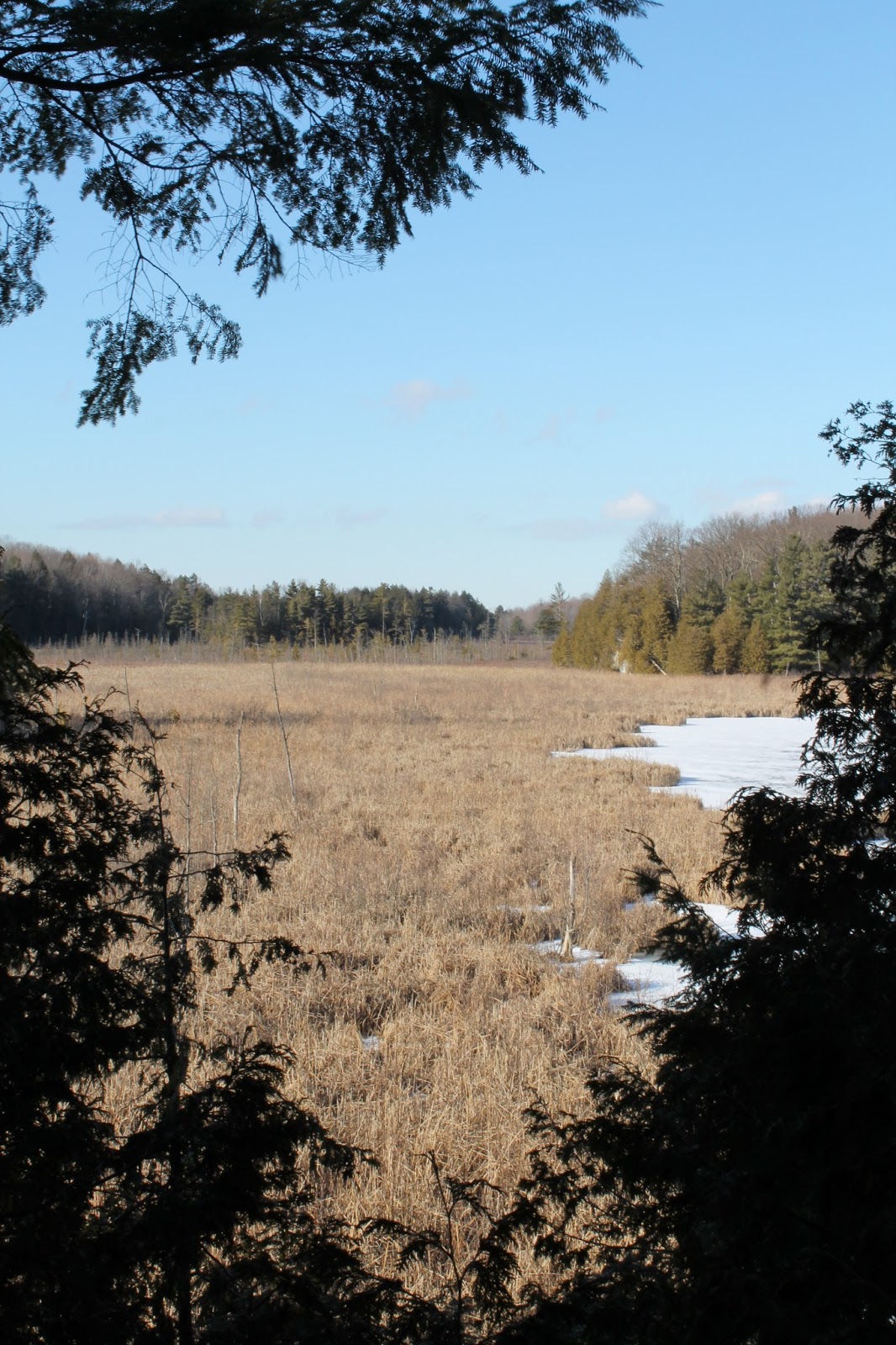
Beyond the hemlock grove was the marsh area of the pond which was quite a large area of the western portion of the pond. Although the marsh was frozen there were many cattails and grasses in the area. There were tufts of grass and shrubbery that poked up from the ice along with many dead trees. The area was a perfect habitat for water fowl as well as frogs, peepers and turtles when the spring arrived. While the ice still covered the pond many smaller animals could scurry across it and use the tall grass as cover from predators. 

Tuesday, February 5, 2013

Jericho Research Forest


     We visited Jericho on an unusually warm day, with temperatures in the 50s and a light rain with strong winds. We visited many different tree stands of various ages. The first being a mixed hardwood forest with some coniferous trees. The younger trees were hemlock and beech trees that were dispersed throughout the area. An old maple tree stood along the road and probably had been there for over one hundred years.
 
     The second area we examined was an area of new growth and clear cutting. It was a research area used to test out a well managed area and one that was hardly managed. On the unmanaged side we found an aspen tree organism that spread out over an area of a football field. On the other side was the managed area that had a few older trees but the small brush was sparse as it was maintained with controlled fires. 

     The final area we examined was an area of older growth. Here we found various maples and oaks that were over one hundred years old. The maps of the land show that it was reverted back to a forest in the mid 1800s. The largest tree and oldest was a white pine that had been standing for over 150 years. It was over 100 feet tall.


Tuesday, January 29, 2013

Shelburne Farms- 1/23


Shelburne Farms
Shelburne Farms in January.
We visited Shelburne Farms on a very cold day with temperatures under -10* F. The sun was out when we arrived around 1:30 in the afternoon on Wednesday the 23rd of January. The location was on the eastern edge of Lake Champlain and consists of 1400 acres of mostly farmland with some forest dispersed among the land. There were two major locations that we shot at, the first being around the large farm barn and the second at the “ice castle” on the edge of the lake. When we began shooting at the barn the sun was falling behind the hills. Two of the main subjects of our shots were the goats that lived in a small paddock. 
One of the goats at Shelburne Farms
Their names remained a mystery but they seemed to be constantly eating to stay warm in the frigid weather. Beyond the goat paddock was the pigmy goat enclosure and the donkey enclosure. The animals mostly stayed inside their enclosures except when the goats were fed. Following the encounters with the animals we drove about a mile onto the farm to the edge of Lake Champlain where the sun was sinking lower in the sky. The waves were lapping upon the shore and subsequently were freezing in layers. The ice was probably a foot thick and extended from the lake to the wall beyond it. The wall itself appeared to be covered in either hoar frost or advection frost, which left the ice crystals in feathery formations.
Frost on the wall beside Lake Champlain
 The lake itself was steaming due to the air being so much colder than the water. The land around the lake was covered in snow on either side and a sharp wind rushed through the surrounding area.
The growing ice crust on the edge of Lake Champlain.